NASA plans a new human Moon landing through Artemis IV in 2028. Before that, Artemis III is intended to test Orion working with experimental lunar landers in low Earth orbit in 2027. Following NASA’s announcements on October 23, 2026, older programme diagrams need updating: both the sequence of objectives and the spacecraft rendezvous arrangements have changed.
- Artemis II completed its crewed lunar flyby in April 2026.
- Artemis III is a demonstration mission near Earth, rather than a landing.
- Artemis IV, including a lunar landing, is planned for 2028; no exact day is set.
- The first landing provider will be selected according to lander readiness.
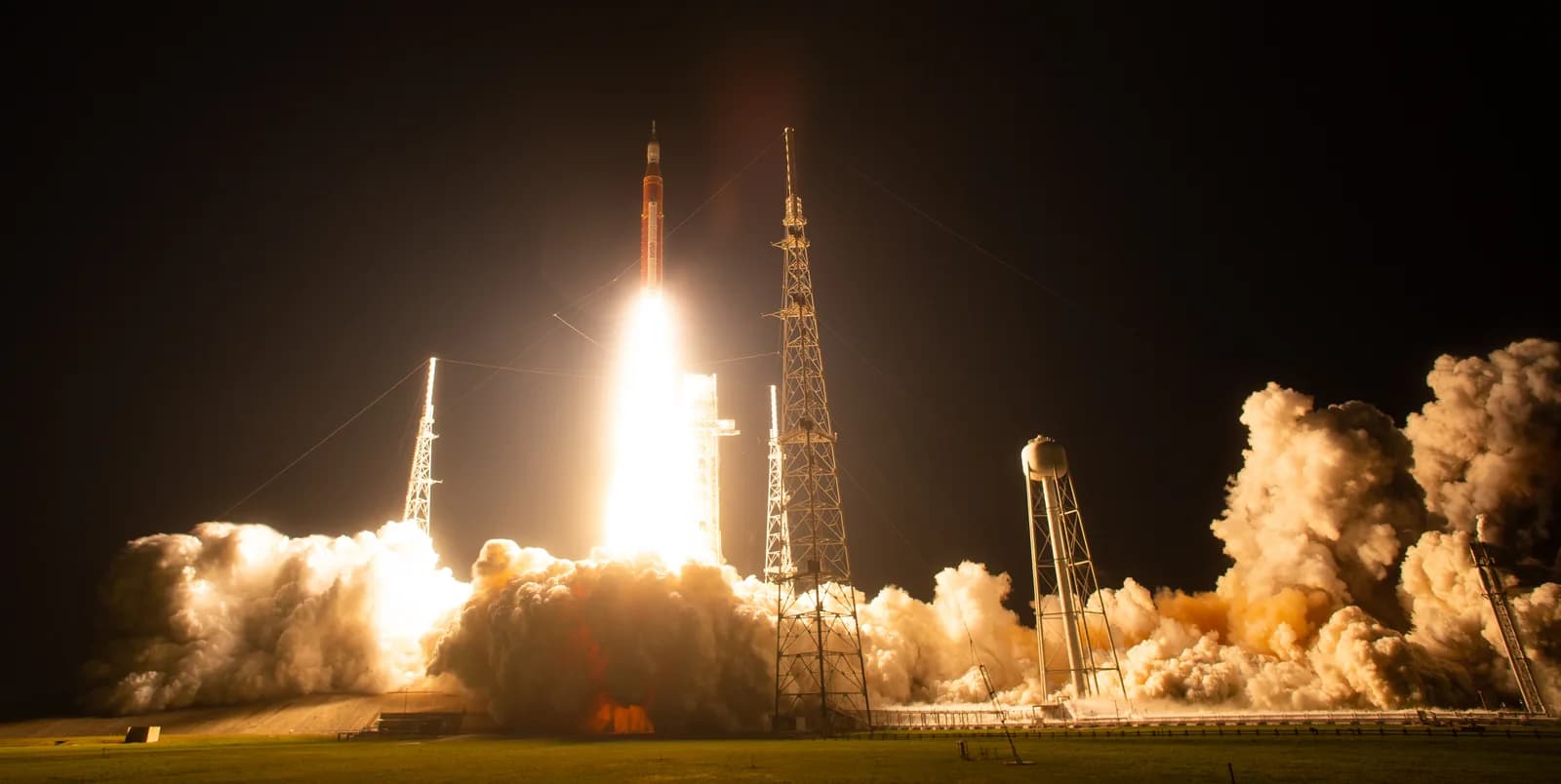
What is the Artemis programme?
Artemis is a lunar exploration programme involving NASA, international partners and commercial companies. Its objective extends beyond a single landing: it aims to enable repeated expeditions and sustained work near the Moon and on its surface. A mission number identifies a stage of the programme but does not, by itself, say where the crew will travel or whether anyone will step onto the ground.
The programme combines different tasks: flying around the Moon, testing spacecraft near Earth and landing on the surface. Each requires its own vehicles and preparation.
Low Earth orbit remains a distinct testbed for living and working in space. ISS retirement therefore does not mean the lunar programme automatically replaces all of its research capabilities. NASA plans a transition to commercial orbital destinations while applying experience from the station to future missions farther from Earth.
What Artemis II has already achieved
Artemis II launched on April 1, 2026, and ended with splashdown on April 10 according to NASA’s dating. Four astronauts flew around the Moon in Orion and returned to Earth without landing on the lunar surface.
The crew comprised Reid Wiseman, Victor Glover, Christina Koch and Jeremy Hansen. The flight tested the spacecraft with people aboard in deep space. This was a substantial step, but the lander has its own development programme: Orion’s successful return cannot replace a demonstration of lunar descent and subsequent ascent.
Why Artemis III will stay near Earth
Under NASA’s plan announced on October 23, 2026, Artemis III will send four astronauts into low Earth orbit. Over approximately 14 days, they are expected to practise operating Orion with test vehicles from Blue Origin and SpaceX. The work will cover rendezvous, docking, crew operations and control procedures needed for future lunar expeditions.
The point is to test the combined system. Two spacecraft may each pass their individual checks, yet a joint flight requires their navigation, communications, software and separate teams to work together. This rehearsal can reveal problems before people travel to the lunar surface. It is a challenging mission in its own right, even though its route remains relatively close to Earth.
Who will fly on Artemis III?
NASA identifies the crew as Randy Bresnik, Frank Rubio and Andre Douglas, joined by ESA astronaut Luca Parmitano. They are scheduled to launch on an SLS rocket in Orion. This group belongs specifically to the Artemis III demonstration mission; it should not automatically be presented as the crew who will make the first surface excursion on Artemis IV.
When is the human Moon landing planned?
Artemis IV is intended to be the first landing mission in the revised sequence. NASA’s mission page gives early 2028 as the target. This is a planning milestone, not a guaranteed launch date. The hardware must first demonstrate readiness, complete testing and support the full set of operations, including the crew’s return.
The mission description envisages two astronauts descending to the lunar south polar region, carrying out scientific work and rejoining the remaining crew. The lander moves people between orbit and the surface; Orion provides their return to Earth. This division of responsibilities makes advance testing of spacecraft compatibility essential.
What do SLS, Orion and the lunar lander do?
SLS is the rocket that carries the crew’s spacecraft into space. Orion is the vehicle in which the astronauts work and return to Earth. Its European Service Module supplies propulsion, electrical power, thermal control, and water and gases for life support. It is a spacecraft element with specific responsibilities, not a lunar landing vehicle.
A separate lander is needed to descend to the ground. SpaceX and Blue Origin are developing these systems. The crew’s launch depends on preparations involving other spacecraft, equipment and ground teams.
What NASA changed on October 23, 2026
Under SpaceX’s revised concept, the lunar Starship will meet Orion in Earth orbit and send the docked vehicles towards the Moon. Blue Origin’s concept uses a different sequence and a rendezvous in an elliptical polar lunar orbit. The previous arrangement requiring both options to meet in the same type of lunar orbit is therefore no longer universal.
NASA also clarified that neither lander provider has yet been assigned to a specific landing mission. Readiness will determine the choice for the first landing. Both developers must first carry out an uncrewed demonstration. Public claims that a company is leading the race cannot replace those milestones.
Why astronauts are heading to the lunar south pole
Some permanently shadowed areas inside polar craters show evidence of water ice and other frozen substances. These deposits interest researchers as a record of lunar history and a possible resource for future operations. Their presence does not mean water is distributed evenly across the pole or is already available for industrial extraction.
Sunlit areas sit alongside deep shadows, and the terrain affects power supplies and communications. These conditions matter when selecting a landing site. Initial excursions and sample collection will help prepare subsequent expeditions.
Sources
- NASA — Artemis III objectives, October 23, 2026
- NASA — revised lunar landing concepts, October 23, 2026
- NASA — Artemis IV
- NASA — Artemis II
- NASA — European Service Module
- NASA — The Lunar South Pole Region
- NASA — Artemis program
- Canadian Space Agency — Artemis II daily logbook
- NASA: ISS transition plan
Image
Questions and answers
When will humans land on the Moon again?
As of October 24, 2026, NASA’s plan calls for the first new landing on Artemis IV in 2028. An exact launch day has not been announced.
Will Artemis III go to the Moon?
Under the current plan, the 2027 mission operates in low Earth orbit and tests spacecraft working together. A landing belongs to the following stage.
Has Artemis II already finished?
Yes. The crewed lunar flyby took place in April 2026. It did not include a landing on the Moon.
Will SpaceX or Blue Origin take astronauts to the surface?
NASA ties the first lander selection to readiness. In its October 23 update, neither provider was assigned to a specific landing mission.
Will Orion land on the Moon?
In this architecture, Orion does not land on the ground. The crew uses a separate lunar lander for that task.
Why might the landing schedule change?
Launch depends on test results and the readiness of the lander, spacecraft, rocket and other systems. A target year is not the same as a final approved flight date.