How we know there was water on Mars
Valleys, deltas, and sedimentary structures indicate that water once moved across the Martian surface. Minerals and rocks whose formation is associated with watery environments provide another line of evidence. These clues are valuable because they complement one another: the terrain's shape describes movement, while material composition helps reconstruct conditions.
Mars's present atmosphere is very thin and consists mainly of carbon dioxide. Liquid water cannot last long in the open on the surface in the familiar terrestrial form. Water ice survives in the polar regions and beneath the surface. Discussions of water must therefore account for time: an ancient lake environment and today's cold planet represent different stages of history.
What Perseverance is investigating in Jezero Crater
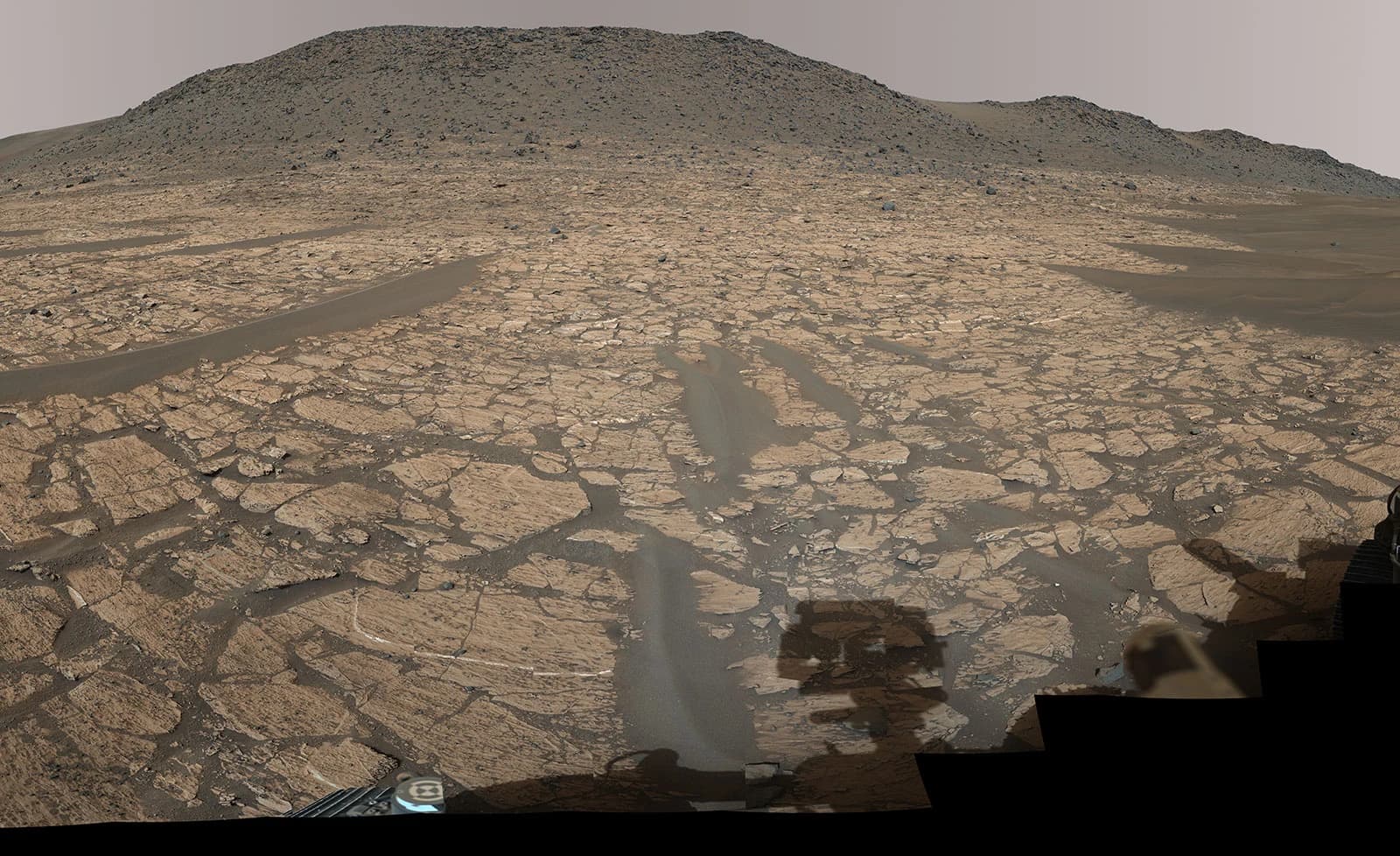
Jezero is of interest for its traces of an ancient lake and river delta. Perseverance studies rock layers and composition to understand how the environment changed and where ancient chemical traces could have been preserved. The rover has found more than sedimentary material: igneous rocks on the crater floor show that its history was more complex than a single picture of a tranquil lake.
Large boulders carried into the delta region indicate episodes of strong flows. Other areas reflect more peaceful sediment accumulation. This combination helps reconstruct a sequence of events, rather than simply labeling a place on the map “once wet.” Each sample gains meaning from its surrounding terrain, neighboring layers, and results from several instruments.
Why organic material does not necessarily mean life
The mission's goals include searching for signs of ancient microbial life and collecting samples suitable for further study. A potential sign, however, is the beginning of an analysis, rather than ready-made proof. Researchers must test whether similar structures or chemical combinations could arise without organisms. This caution does not diminish a finding's value: it determines the next experiment.
The rock's context, multiple independent methods, and an assessment of possible contamination all matter. A particularly strong conclusion must explain why nonbiological scenarios do not fit. No discovery of Martian life has yet been confirmed. When reading news, ask: was water found, an organic compound, a possible biosignature, or was the signal's origin actually established? These statements are not interchangeable.
Is there water on Mars now?
Water ice survives in the polar regions and beneath the surface. This differs from the ancient rivers whose traces rovers investigate. Today's low pressure and cold make stable, exposed bodies of liquid water difficult to sustain.
The location of ice deposits matters for future exploration, but detecting ice and obtaining usable water from it are different tasks. Measurements of depth, composition, and energy requirements are needed.
How can we distinguish traces of water from evidence of life?
Deltas, sedimentary rocks, and certain minerals help reconstruct the history of water. Organic substances add information about environmental chemistry, but can form without living organisms.
Convincing evidence requires several indicators to be analyzed together and alternative explanations tested. “Conditions may have been suitable for life” and “life has been discovered” therefore cannot be substituted for one another.
Why a sample needs its geological context
Perseverance collects small cores: cylindrical pieces of rock. The aim is not to bring back the most unusual-looking stone. Researchers need a collection representing different processes and stages in Jezero’s history. An igneous sample can help investigate rock formation and age, while sedimentary material records transport and deposition. Together they address more questions than several similar fragments collected at one location.
Each core has a surrounding history: the position of its layer, nearby rocks, imaging results, and composition measurements. If water altered a mineral, researchers need to establish whether this happened as the rock formed or much later when liquid moved through fractures. Both scenarios involve water, yet their conditions and their ability to preserve ancient traces differ. Geological context helps distinguish those possibilities.
The collected material is intended for possible later study on Earth; collecting a core does not mean its delivery has already happened or is guaranteed. Laboratories can use a range of complementary methods that would be difficult to fit on a single rover. Careful selection therefore has lasting value: it connects future analyses to a documented site on Mars, instead of leaving researchers with an unidentified fragment of unknown origin.
The MMX mission offers a way to complement studies of the Martian surface with analysis of material from its moon Phobos. Models of impact transport suggest that grains ejected from the Martian crust may have reached the moon. The planned return of Phobos samples provides an opportunity to search for this component, although its presence and the origin of individual grains remain to be established. Material collected on the moon will require its own geological interpretation even if a Martian component can be identified.
Sources
Questions and answers
Does Mars have water today?
Yes, mainly in the form of water ice. This does not mean that stable, open lakes exist under current surface conditions.
Has Perseverance already proved that life exists?
No. The mission studies an ancient environment and possible signs; confirming a biological origin requires additional tests.