For the 2026 Leonids, the main reference night in Russia is November 17–18. The waxing Moon illuminates the evening sky, but useful observing hours remain after it sets. The forecast includes encounters with old cometary dust trails, although no significant outburst is expected. This is an opportunity to see very fast meteors, not a promise of thousands of shooting stars or an identical display in every time zone.
- The detailed IMO calendar gives a predicted maximum of November 17 at 23:45 UT, or November 18 at 02:45 Moscow time. This is a model reference time, not a guarantee of minute-level accuracy.
- A ZHR of about 15 describes standardized activity. Your result depends on radiant altitude, darkness, transparency and observing duration.
- The Moon reaches first quarter on November 17. Plan for the hours after local moonset rather than treating the entire night as moonless.
- Models of weak trails on November 17–19 allow for a modest enhancement. No major meteor storm is forecast for 2026.
When the peak occurs, and why calendars show different dates
In the detailed International Meteor Organization calendar, the Leonids are active from November 6 to 30. The principal predicted maximum is November 17 at 23:45 Universal Time, UT. In Moscow, that is 02:45 on November 18. The recent Moscow Planetarium forecast also highlights November 17–18.
When checked on October 31, the IMO and NASA web summary cards show the night of November 16–17, differing from the detailed forecast. This guide uses the IMO PDF for scheduling in Russia, consistent with IGN and the planetarium. Even that forecast is not a stopwatch: the same section includes Maslov’s alternative estimate of around 16:00 UT on November 17. Observe the available dark hours near the maximum rather than one appointed minute.
When to watch in Moscow, Siberia and the Russian Far East
One predicted instant translates into different local times: 02:45 in Moscow, 04:45 in Yekaterinburg, 06:45 in Novosibirsk and 09:45 in Vladivostok on November 18. These are not four separate peaks. For Moscow and the Urals, the reference time falls at night; in Siberia, check the approaching morning twilight.
For Vladivostok, USNO calculates sunrise on November 18 at approximately 08:08, making 09:45 too late for meteor watching. Choose the predawn part of the local night instead, accepting that it will not coincide with the principal predicted maximum. If clouds interfere, a clear adjacent night can still produce individual Leonids, but equal activity is not promised. In any city, darkness combined with a high radiant matters more than an appealing time on a clock.
Will the Moon interfere? Moonset matters as well as phase
USNO gives first quarter as November 17 at 11:48 UT, or 14:48 Moscow time. A claim that a thin lunar crescent only a few percent illuminated accompanies this maximum is therefore incorrect. The Moon will noticeably brighten the evening sky. The favorable circumstance is different: it will set before the predawn hours, when Leo is higher.
For Moscow, the November 17 calculation gives moonset at approximately 23:40. In Novosibirsk, it sets at about 00:31 on November 18. These times apply to the selected coordinates and an unobstructed horizon; terrain and the observer’s position alter the visible event. Saying that the Moon will not interfere is appropriate for a chosen late window, not for the whole night or as a substitute for a local check.
What the forecast of 15 meteors per hour means
The IMO PDF lists a ZHR of about 15. This standardizes activity to a dark sky and a radiant at the zenith. A real observer sees a different picture: a low radiant reduces the available meteor count, while city lights and haze hide faint streaks. One cannot promise everyone fifteen visible flashes or exactly one meteor every four minutes.
NASA separately notes that observed Leonid rates are often only a few meteors per hour. This is a practical caution, not a competing prediction of a different storm. A striking bright meteor and a high hourly rate are also different things.
What the weak dust trails of November 17–19 may add
The stream is not one uniform dust ribbon. Particles from different cometary returns form structures that evolve differently under gravity and other influences. In the 2026 calendar, calculations by Sato and Vaubaillon list several possible encounters with low-density trails on November 17–19. One discussed trail dates from the comet’s 1800 return; others are older.
The researchers do not promise a major outburst: one case has too few particles, another trail passes too far away, and a possible enhancement is described as modest. Adjacent nights are therefore interesting for observing and testing models, but a headline promising a three-day storm would misrepresent the forecast. As of October 31, these are calculations of future encounters, not measured activity from November’s shower.
Why a comet returning every 33 years does not guarantee a storm
The Leonids’ historical fame comes from rare major events, including the 1966 storm and displays in 1999–2002. The comet’s orbital period is not a timetable for identical performances. What matters is a particular dust trail’s position and density, and how closely Earth passes it.
In the usual definition, a meteor storm means a thousand or more meteors per hour, rather than simply several attractive streaks. No such event is forecast for 2026. Comet Tempel–Tuttle’s next perihelion is expected in 2031, but that date cannot automatically be sold as a guarantee of another storm either. Observing a modest shower has value without matching a historical record.
Where the Leonids come from, and why they are so fast
The particles originate from comet 55P/Tempel–Tuttle. Earth encounters material it left behind each year; the comet itself does not have to pass nearby in November. Particles enter the atmosphere at approximately 71 kilometres per second, producing a luminous meteor. The observed streak is an atmospheric event caused by an incoming particle, not a star leaving its constellation.
The Leonids differ from December’s Geminids, which travel at around 35 kilometres per second and have a different source, asteroid Phaethon. These are separate showers rather than one wave lasting two months. A single photograph of a bright meteor does not always establish its shower membership reliably.
Before the Leonid peak in November, you can watch the Taurids. Their particles encounter Earth at roughly 27–29 km/s, while the typical Leonid speed is about 71 km/s. The streaks can therefore look quite different in the same patch of sky. To identify a meteor’s shower, observers also look at the direction of its path.
Where to look: the radiant in Leo and a wide area of sky
Tracing Leonid paths backward makes them converge in the region of Leo. This is a perspective effect. At mid-northern latitudes, the constellation is better placed in the second half of the night, making a brief evening outing less promising. Leo’s stars help locate the direction, but are not the source of the cometary dust.
Do not stare only at the radiant or Regulus. NASA recommends taking in a broad area of sky: paths appear longer away from their convergence point. A comfortable open site matters more than precise aiming, while a telescope or binoculars restrict the view too much for this task. If constellations are unfamiliar, identifying a constellation from a photo can help you prepare before the session.
How to choose a site for a modest Leonid display
When activity is modest, losing faint meteors matters especially. A light pollution map can help compare accessible sites, but also check nearby lamps, trees and how much sky is open. For the Leonids, a view toward the east and a broad area overhead is useful; beside a brightly lit building, even an otherwise good rural area can be unsuitable.
Check hourly cloud and transparency forecasts closer to the trip. An October calendar cannot guarantee clear skies on November 18. Prepare somewhere to remain still comfortably, insulation underneath and a way to warm up. Put the bright screen away after consulting your sky map: NASA recommends allowing approximately half an hour in darkness for your eyes to adapt.
What to do if nothing appears in ten minutes
For an ordinary shower, a lull does not mean the forecast has failed. IMO recommends visual observing sessions of at least an hour: meteors are unevenly distributed, and a short interval poorly represents overall activity. Comfort and conditions limit a recreational outing, but a few minutes cannot provide a reliable activity measurement.
To leave a useful record, note the start and end of watching, breaks, cloud cover and which meteors you think were Leonids. Sporadic meteors also occur, so the total count is not the number of particles from this shower. An honest account of a few fast streaks under specified conditions is more informative than trying to match an advertised fifteen.
Sources
- IMO — detailed Leonid forecast in the 2026 calendar, page 18
- Moscow Planetarium — November sky forecast, October 23, 2026
- IGN — 2026 Leonid forecast and observing advice
- USNO — dates and times of lunar phases in 2026
- NASA — Leonid origins, speed and observing
- IMO — hour-long sessions, meteor recording and observing conditions
- USNO — the Moon in Moscow on November 17, 2026, UTC+3
- USNO — the Sun and Moon in Novosibirsk on November 18, UTC+7
- USNO — the Sun and Moon in Vladivostok on November 18, UTC+10
- IMO — web calendar showing a different date in its summary card
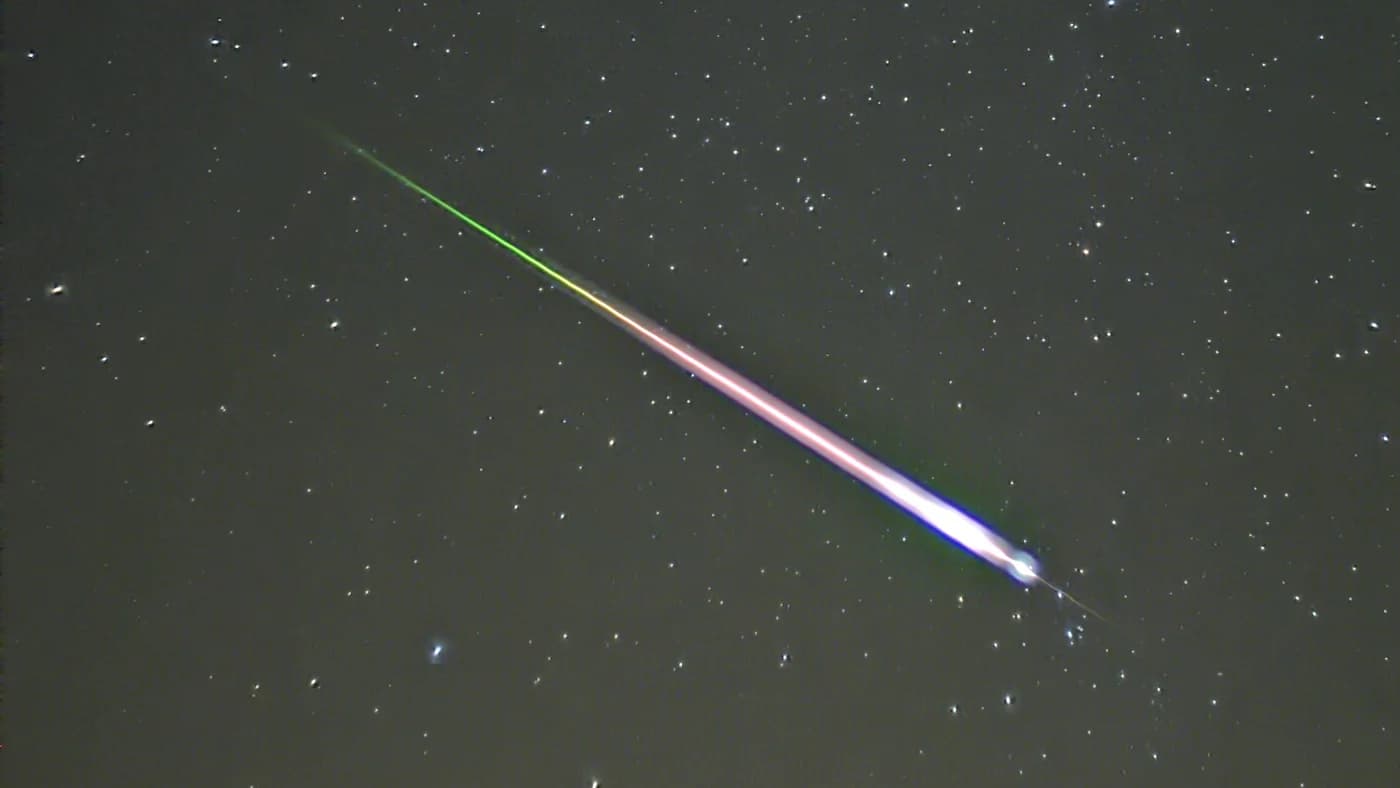
- Wikimedia Commons — the 2009 Leonid photograph and its license
Questions and answers
Will the 2026 Leonid peak be on November 17 or 18?
The detailed IMO calendar’s principal reference is November 17 at 23:45 UT. In Moscow, that is already November 18 at 02:45, hence the November 17–18 night used in Russia. The observed maximum can differ from the calculation.
Should everyone in Russia go outside at 02:45?
No. That is Moscow time for the predicted maximum. In Vladivostok, the same instant is 09:45, after sunrise. Choose dark local hours when the radiant has risen, preferably after moonset.
Will the Moon cause no interference at all?
The waxing Moon will brighten the evening sky. A favorable window opens after it sets: approximately 23:40 on November 17 in Moscow according to USNO. Other cities require their own coordinates and local schedule.
Will there be a meteor storm or thousands of meteors?
No such event is forecast for 2026. IMO gives a ZHR of about 15 and discusses weak dust trails with a possible modest enhancement. This guarantees neither fifteen observed meteors nor a historic storm.
Do I need a telescope to see the Leonids?
No. Ordinary viewing calls for a wide naked-eye view of the sky. Darkness, a cloud-free sky, a comfortable position and observing time matter more than optical magnification.