Gemini: weekly horoscope
—
Try looking at a familiar task from two sides. Leave room for curiosity: an interesting question may be more valuable than a hasty answer.
Plans and focus
Choose a topic that interests you and compare two reliable explanations. Note where they agree and what needs clarification.
Communication
In a conversation, try first putting what you heard into your own words. It is a simple way to check whether you understood each other.
This week's activity
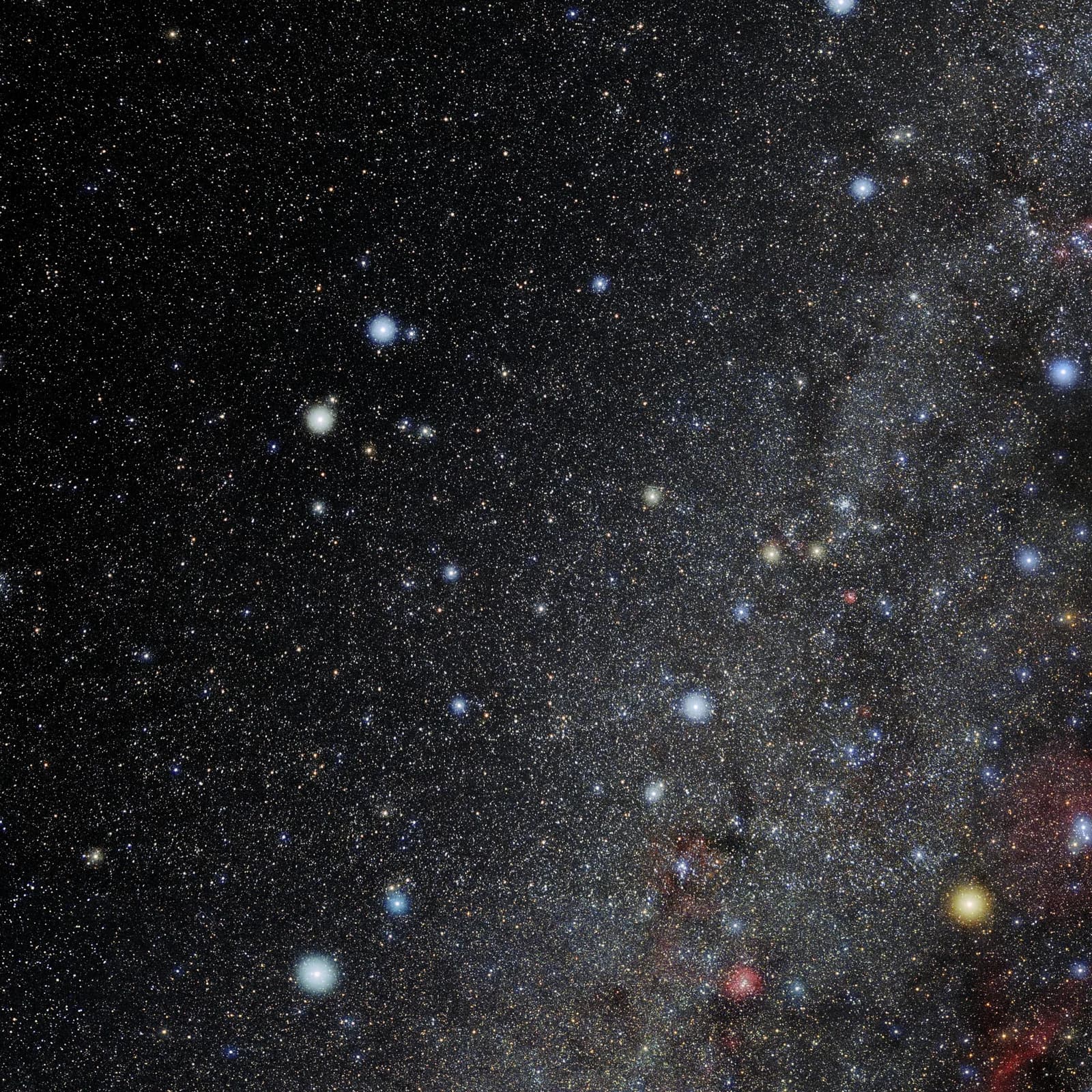
Find Castor and Pollux in an image, then switch to the map and trace both chains of stars.
The weekly horoscope is original entertainment and a prompt for reflection, not a scientific prediction or a description of your personality. Its suggestions are not based on the influence of stars and do not replace your own judgment.
Constellation Gemini.
A sign is a conventional zodiac sector; a constellation is a region of the starry sky. The sign dates above do not describe when the Sun is within the constellation's boundaries.
- Main guide stars
- Castor and Pollux
- Deep in the sky
- M35 — open cluster
- Distance to M35
- About 2,800 light-years
Two names on the star map
In Greek and Roman mythology, Castor and Pollux are twins. Their names were given to the two stars marking the heads of the celestial figures. The myth helps us remember the pattern, but it does not explain the stars' physical properties.
Once you find the pair, follow the two chains toward the fainter stars. Instead of isolated points, the elongated figure of Gemini begins to emerge. When looking at a photograph, zoom out first so that both chains remain visible.
A scattering of stars at the Twins' feet
Near Castor's foot lies M35, a young open cluster about 2,800 light-years from Earth. Unlike the imagined constellation figure, its stars form a related group with a shared history of formation.
M35 was discovered in the 18th century; today, both amateurs and space telescopes observe it. Through binoculars, it looks far subtler than in Hubble images: a photograph collects light and detail that the eye cannot immediately distinguish.
How to keep Gemini’s two chains separate
The two bright heads do not establish the orientation of the entire figure. Mark the direction from Castor toward his foot, then trace Pollux’s chain separately. Do not connect stars merely because they appear close on screen. Compare successive segment lengths and angles, and zoom out when the outline reaches the edge. Otherwise a neighbouring constellation’s star can easily become part of an imagined twin.
On a wide photograph, locate both reference stars before following one chain at a time. Return to the pair and repeat the route for the other twin. This leaves a clear starting point. With chart lines hidden, retrace the paths and check the labels. Mistakes are useful: they identify a gap you have not yet learned rather than requiring you to relearn the entire constellation.
Why M35 is useful for studying stellar evolution
Stars in an open cluster share an origin and similar ages, yet differ in mass. Researchers can therefore compare them under better-understood initial conditions. Images of M35 show hot blue stars alongside cooler giants. Those differences do not contradict a common birth: stars of different masses move through their evolutionary stages at different rates.
The complete M35 group is far wider than an individual detailed Hubble frame. A close-up containing a few stars need not show a neat, finished portrait of the cluster. Before judging its shape, examine the wide field and the marked close-up area. That comparison explains why two illustrations bearing the same object name may initially look unrelated.
Planning a first look at M35
First confirm Gemini, move along the chart to Castor’s foot, and only then enlarge M35. Opening a tight cluster image immediately removes its connection to the bright reference stars. Keep two scales available: the overall figure with Castor and Pollux, and the target field. This preserves your route when moving from the screen to an eyepiece.
During a first observation, note whether you see a hazy patch, individual stars, or both. Do not try to make your eye reproduce a photograph. Compare the result at another magnification: does the whole cluster remain in view, and is it easier to separate from the background? A useful record describes actual visible detail rather than everything promised by the most spectacular image.
If another compact patch appears nearby, do not identify it from resemblance alone. NASA notes the neighbouring cluster NGC 2158, but its position should be checked on a chart. Sketch M35 and the possible neighbour relative to nearby stars. A verified location is more valuable than a confident name assigned without comparison; this is the beginning of independent deep-sky observing.
What the star pattern looks like
Questions about the sign and constellation
Why are the stars called Castor and Pollux?
Their names come from the mythological twins. This is the cultural history of a sky pattern; it does not mean the two stars are identical or formed together.
What can I look at in Gemini besides the two main stars?
The open cluster M35. Find its position near Castor's foot on the map, then plan your observation around the constellation's local visibility and the darkness of your sky.
Sources and photograph
The sources below support the astronomical information. The horoscope is original COSMO360 entertainment content; it is not a conclusion drawn by NASA, the IAU or observatories.
- NASA: Castor and Pollux in Gemini
- NASA / Hubble: the open cluster M35
- IAU / Sky & Telescope: constellation chart for Gemini
- NASA Space Place: constellations, astronomy and astrology
- NASA Night Sky Network: zodiac signs and constellations
- Original photograph — E. Slawik/NOIRLab/NSF/AURA/M. Zamani
- CC BY 4.0 terms
- Chart: HYG 4.1 catalog, J2000 coordinates